AI Isn't Coming. It's Already Taking Your Customers.
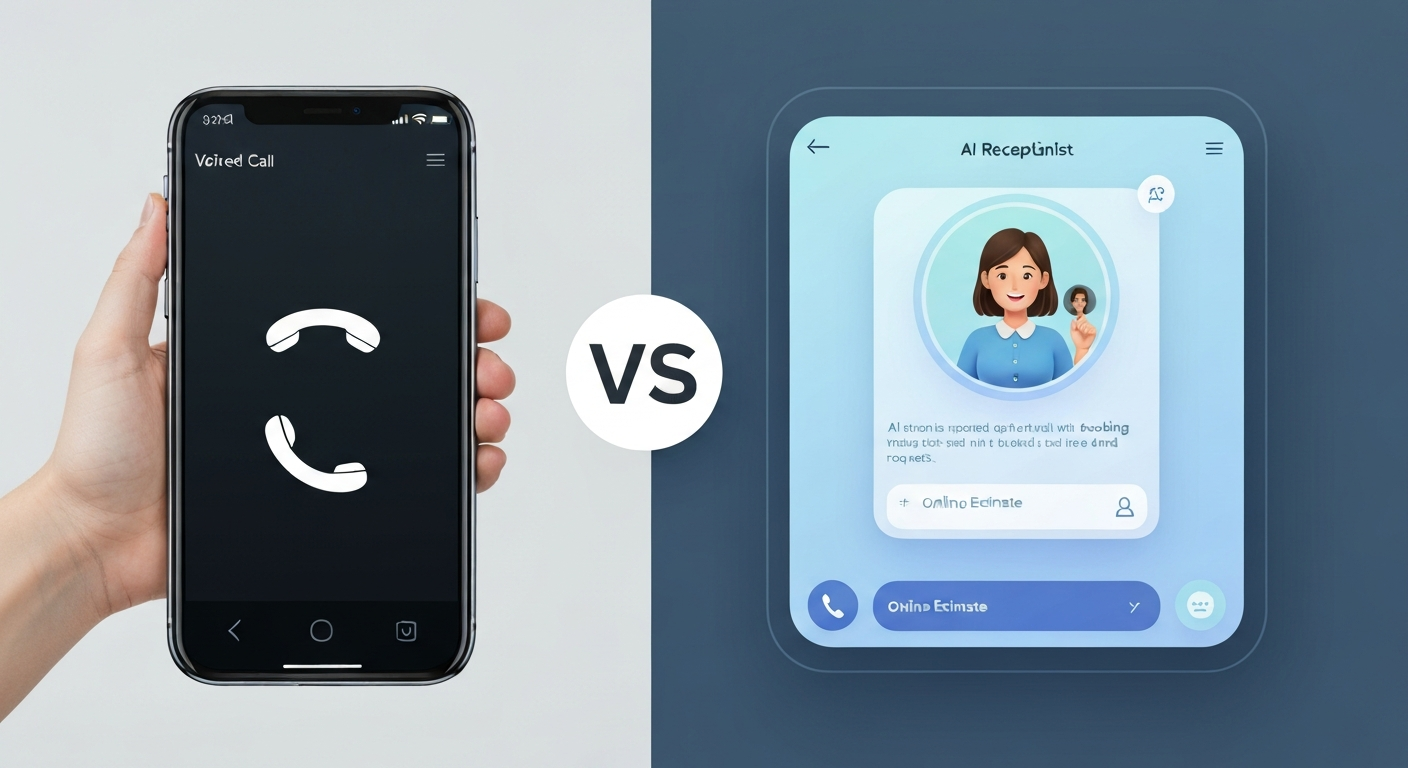
There's a comfortable myth a lot of contractors are telling themselves right now: AI is some future thing. I'll figure it out eventually. Right now, I'm too busy actually running my business.
Here's the uncomfortable truth: it's not coming. It's already here, and it's already costing you jobs — right now, this week, possibly today. Not because AI is magic. Because while you were on a roof, in a crawlspace, or at dinner with your family, a competitor's AI receptionist answered the call you missed, booked the estimate, and locked in the job before your voicemail even picked up.
This isn't a warning about some distant future. It's a description of what's happening in your market right now.
The Moment You're Actually Losing
Picture the exact moment it happens. A homeowner needs a repair. They search, they find two or three options, and they start calling.
Company A: rings four times, goes to voicemail. The homeowner hangs up and calls the next name on the list.
Company B: answers in under two seconds — because it's an AI receptionist, not a person, and it doesn't need to finish a job first. It introduces itself as the business, answers a couple of quick questions, checks real-time availability, and books the estimate for Thursday at 10am. The homeowner gets a confirmation text before they've even finished their coffee.
The average contractor misses 4-6 calls a day while working. Every one of those is a homeowner who's already decided to spend money with someone today — and if you don't answer fast, that someone simply won't be you.
This Isn't About Whether AI Is "Good" or "Bad"
A lot of the resistance to AI in this industry comes from a fair, understandable place: contractors built their reputation on personal relationships, hard work, and being the kind of business people trust. The fear is that automation cheapens that.
But here's what's actually happening in the market: your competitors who are adopting AI aren't becoming less personal. They're becoming more responsive — because the AI is handling the moment that used to go to voicemail, freeing up the owner and the team to focus on the actual relationship once the job is booked.
The businesses using AI well aren't replacing trust. They're protecting the window of time in which trust even has a chance to be built — the first call, the first response, the first impression.
What's Already Changed in Customer Behavior
Homeowners today expect a response almost immediately. A missed call doesn't get a second thought anymore — it gets a call to the next name on the list. Waiting even 30 minutes to call a lead back dramatically lowers the odds of ever reaching them, let alone converting them.
At the same time, that same homeowner has already read your reviews, checked your website, and compared you to competitors before they ever picked up the phone. Speed and digital presence aren't nice extras anymore — they're the baseline expectation.
Contractors who are still operating on "I'll call them back when I get a chance" are competing against businesses that respond in under two seconds, 24/7, including nights, weekends, and holidays.
What AI Is Actually Doing for Contractors Right Now
This isn't theoretical. Right now, in real contracting businesses, AI is already:
- Answering every call instantly — using a knowledge base built from the business's own services, pricing, and FAQs
- Booking estimates in real time — checking actual calendar availability and locking in the appointment without back-and-forth
- Sending instant confirmations — to the customer and the owner, the moment a job is booked
- Living on the website as a chat widget — so leads from Google or ads never hit a dead end, even after hours
- Following up on unsold estimates automatically — recovering jobs that used to just quietly disappear
- Requesting reviews the moment a job is completed — building the digital reputation that earns the next customer's trust before they ever call
None of this replaces your team. It replaces the delay that used to exist between a homeowner's need and your business's response — and in a market this competitive, that delay is exactly what's costing you the job.
The Real Risk Isn't Adopting AI Too Early
Most owners worry about adopting new technology too soon — wasting money on something unproven, or looking gimmicky to their customers. That's a reasonable instinct in general. But it's the wrong risk to be worried about right now.
The real risk is adopting it too late — after your competitors have already captured the customers who used to be yours, built the review volume that outranks you, and established themselves as the fast, reliable, always-available option in your market.
This is one of those rare moments where being early isn't risky. Being late is.
What to Do About It, Starting This Week
You don't need to overhaul your entire business overnight. Start with the single highest-leverage move: stop losing calls to voicemail. An AI receptionist can be live in your business in under a week, answering every call your team can't get to, and booking the estimate before the homeowner even considers calling the next name on their list.
From there, layer in automated follow-up, review requests, and content — each one closing another gap between where your business is today and where the market is already heading. (For a full breakdown, see our post on How to Build an AI-Powered Contracting Business.)
The Bottom Line
AI in the contracting industry isn't a future trend to keep an eye on. It's a present-tense competitive reality, and it's already reshaping who wins the call, the estimate, and the job in markets across the country — including yours.
The contractors who adapt now aren't chasing a trend. They're simply making sure that the next homeowner who calls two businesses at the same time hears yours answer first. If you want to see how this works in your business, book a free strategy call and we will walk you through exactly what an AI receptionist would look like in your company.
Frequently Asked Questions
How many calls does the average contractor miss per day?
Most contractors miss 4 to 6 calls per day while out on jobs. Every missed call is a homeowner who has already decided to spend money with someone today — and if you do not answer fast, that someone simply will not be you. An AI receptionist closes that gap by answering instantly, 24/7.
Can an AI receptionist actually book estimates for my business?
Yes. A properly configured AI receptionist checks your real-time calendar availability, offers the customer open time slots, books the appointment, and sends instant confirmations to both the customer and you — all in under two seconds, including nights, weekends, and holidays.
Will customers know they are talking to an AI?
A good AI receptionist introduces itself as your business and is transparent about being an AI assistant. Most customers do not mind — they care about getting their question answered and their appointment booked quickly, not whether a human or a bot handled the intake. The key is that it answers instantly and never sends a paying customer to voicemail.
How fast do I need to respond to a new lead to win the job?
Studies consistently show that contacting a new lead within five minutes dramatically increases conversion compared to waiting even thirty minutes. Most contractors cannot personally respond that fast every time, especially outside business hours — which is exactly the gap an AI receptionist fills.
Stop losing calls to competitors
Ready to stop losing calls — and customers — to competitors who answer faster? Get the AI Receptionist and stop losing jobs to a missed call, starting this week.
Get the AI Receptionist